The Chronological Evolution of Astrology
From the ziggurats of Mesopotamia to the modern scientific era, explore how the study of the stars has shaped human culture and understanding for millennia.

A Timeline of Stargazing
Mesopotamian Origins: The Enuma Anu Enlil
The foundations of astrology can be traced back to ancient Babylonia. The Enuma Anu Enlil is a major series of 70 cuneiform tablets containing approximately 7,000 celestial omens. During this era, celestial observations were primarily used for mundane astrology—predicting the welfare of the kingdom, harvests, and the king's fate rather than individual horoscopes.

Hellenistic Synthesis: Ptolemy and the Tetrabiblos
The intersection of Babylonian data and Greek geometry led to the birth of horoscopic astrology. Claudius Ptolemy, a Greco-Egyptian polymath, codified the systems utilized for centuries in his seminal work, the Tetrabiblos. He sought to rationalize astrology as a natural science, establishing the four elements and the mathematical division of the zodiac that persists into the modern day.

Ptolemy's systematization provided the structural framework that allowed for the calculation of planetary positions with unprecedented accuracy for the time.
The Golden Age of Islam: Preservation and Expansion
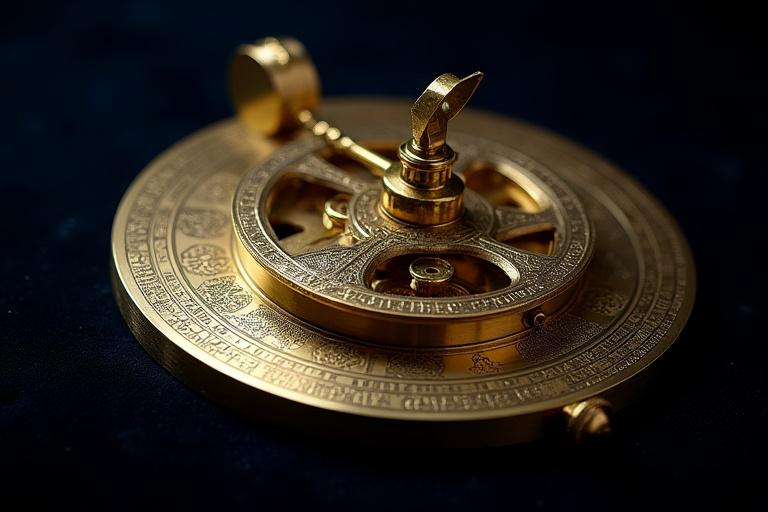
During the Middle Ages, while parts of Europe saw a decline in astronomical rigor, scholars in the Islamic world reached new heights. Knowledge from the Greeks and Indians was translated into Arabic. Figures like Al-Biruni and Al-Battani refined astronomical instruments and tables, ensuring that the mathematical precision of celestial tracking was not only preserved but significantly advanced.
Continue learning about the specific systems that emerged from these eras.
Explore Zodiac Systems