Cultural History & Observation
Understanding Retrograde Motion Historically
Exploring the celestial "backward" dance through the eyes of ancient scholars.
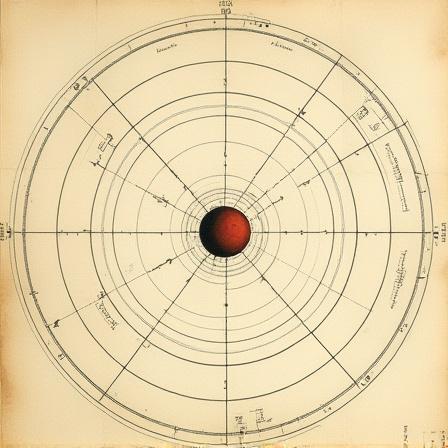
To the naked eye of an ancient observer in Babylon or Greece, the heavens were a clockwork of predictable majesty. However, occasionally, a wanderer—a planet—would appear to slow down, stop, and begin moving backward against the tapestry of fixed stars. This phenomenon, known as apparent retrograde motion, is one of history's most fascinating optical illusions.
From a modern astronomical perspective, this is simply a matter of relative velocity. Imagine passing a slower car on a highway; for a brief moment, the slower vehicle appears to move backward relative to your forward progress. Earth, in its faster inner orbit, occasionally "overtakes" the outer planets like Mars, creating the visual effect of the red planet reversing its course.
The Ancient Interpretation: Omens and Oracles
In antiquity, where the distinction between astronomy and cultural record was fluid, these cycles were observed with meticulous precision. The movements of Mercury and Mars were not merely physical events but significant markers in the cultural calendar.
- The Fear of the "Stationary" Planet: The moment a planet appeared to stop (its "station") was often viewed with trepidation. It represented a pause in the natural order.
- Mercury's Messenger Role: Given its rapid transit, Mercury retrograde was historically documented as a time of logistical complexity, even in records dating back thousands of years.
- Martial Reversals: The retrograde of Mars was frequently associated in historical texts with periods of re-evaluation regarding conflict or leadership.
The Objective Shift
Today, we view these cycles with the clarity of mathematics. We understand that no planet actually changes direction; they continue their steadfast orbits around the Sun. By studying how our ancestors viewed retrograde motion, we gain insight into the human desire to find pattern and meaning in the seemingly chaotic movements of the cosmos.
Explore Celestial Systems